

Medication Errors – Part 1: What You Can Do
This newsletter is part 1 of a 2-part series on medication errors. It describes what consumers can do when medication errors happen. Part 2 describes the pharmacy team’s role when medication errors happen.
Volume 17 • Issue 7 • Part 1
Patient safety is the main priority of everyone working in health care, but medication errors can still happen. Many errors do not cause harm, but some can be serious. Types of medication errors include getting the wrong drug, getting the wrong dose of a needed drug, receiving a medication by the wrong route, or unclear instructions.
ISMP Canada maintains a database of medication error reports from community pharmacies across Canada. According to this database, 20% of medication errors reported in 2025 were discovered by the patient or a caregiver.
If you discover a medication error:
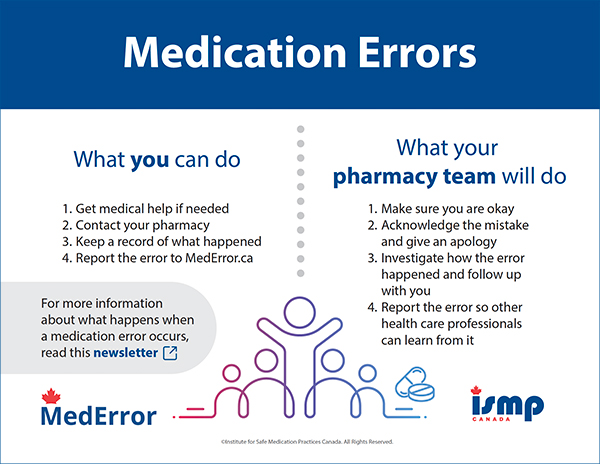
1. Get medical help if needed. If you or your family member is not feeling well, contact your health care provider or emergency services. If you have taken a wrong medication or an incorrect dose, call your regional poison centre for advice.
2. Contact your pharmacy. They need to know about the error. The pharmacist can tell you what side effects you should watch for. If the error was caused by a mistake at the pharmacy, they will also ensure the mistake is fixed.
3. Keep the packaging of the medication and note the following:
- Date and time when the error occurred, and who found the mistake
- How many doses were taken, if any
- Any health problems or symptoms that occurred, if the medication was taken
4. Share your experience.
- Discuss what happened with the pharmacy professional involved.
- If you believe further action is needed, contact the appropriate provincial regulatory college.
- Share your report anonymously with MedError.ca to help other consumers learn from and prevent medication errors across the country.
Download the safety resource Medication Errors – What You Can Do
—
MedError newsletters are reviewed by consumers who are committed to improving medication safety. Learning from consumer reports is shared with health care providers through ISMP Canada publications. This newsletter shares information about safety medication practices, is noncommercial, and is therefore exempt from Canadian anti-spam legislation. *Funding support provided by Health Canada. The views expressed herein do not necessarily represent the views of Health Canada. Mederror is a component of the Canadian Medication Incident Reporting and Learning Prevention System (CMIRPS).