


More Is Not Always Better: 5 Questions to Ask About My Multiple Medications
Volume 16 • Issue 12
Taking multiple medications is common for older adults and for anyone with chronic conditions. While often needed, multiple medications can increase the risk of side effects, drug interactions, and even hospital visits. Asking the right questions can help you and your health care team decide which medications are working well and which ones might need to be changed or stopped.
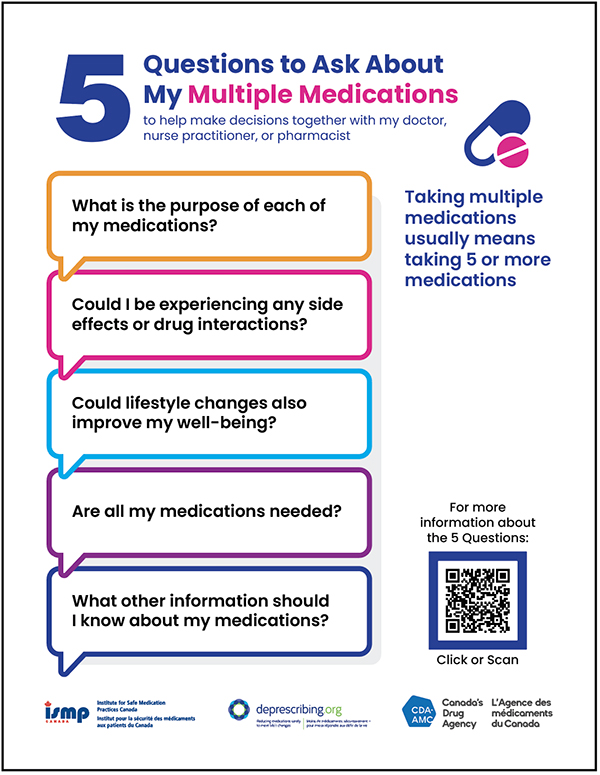
ISMP Canada worked with Canadian patients, caregivers, Canada’s Drug Agency,1 and an organization called deprescribing.org to create a handout called 5 Questions to Ask About My Multiple Medications.
Asking these questions can help you
- make decisions together with your doctor, nurse practitioner, or pharmacist;
- reflect on what’s working well, and what might need attention;
- be more involved in decisions about your health.
FACT:
More than 3 out of 5 Canadians over the age of 65 take at least 5 prescription medications.
(Canadian Institute for Health Information, 2022)
Tips for Staying Safe with Multiple Medications
- Continue to ask questions. Don’t be afraid to ask your doctor, nurse practitioner, or pharmacist, “What is the purpose of each of my medications?”
- Watch for new symptoms. Let your care team know if you are feeling unwell or have a new symptom. You might want to ask, “Could I be experiencing any side effects or drug interactions?”
- Keep an updated medication list. Bring a current list of all prescription and nonprescription medications, including vitamins and supplements, to each visit with your health care provider. You could ask, “Are all my medications needed?” As your health changes, something that was once needed might no longer be necessary.
For More Information
The 5 Questions to Ask About My Multiple Medications tool has an accompanying toolkit to give you more information on the following topics:
- risks of taking multiple medications
- practical tips for each question
- more resources, including Judith Maxwell’s story about the impact of inappropriate medications
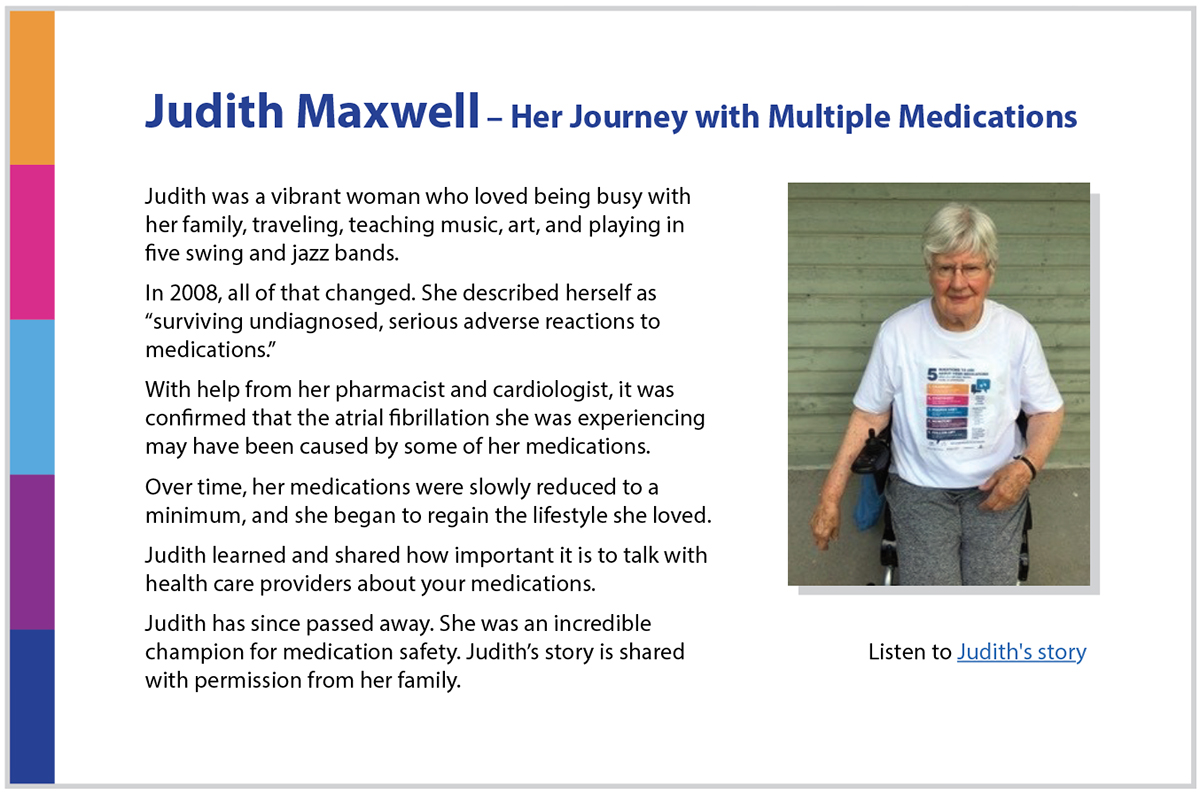
Listen to Judith’s story
—
1 Canada’s Drug Agency provided funding to ISMP Canada for development of the tool and toolkit.
—
MedError newsletters are reviewed by consumers who are committed to improving medication safety. Learning from consumer reports is shared with health care providers through ISMP Canada publications. This newsletter shares information about safety medication practices, is noncommercial, and is therefore exempt from Canadian anti-spam legislation. *Funding support provided by Health Canada. The views expressed herein do not necessarily represent the views of Health Canada. Mederror is a component of the Canadian Medication Incident Reporting and Learning Prevention System (CMIRPS).